
Reference disclaimer
For training and reference purposes only. Figures describe the stated variant under standard conditions. Verify against the applicable POH/AFM and current aircraft records.
Overview
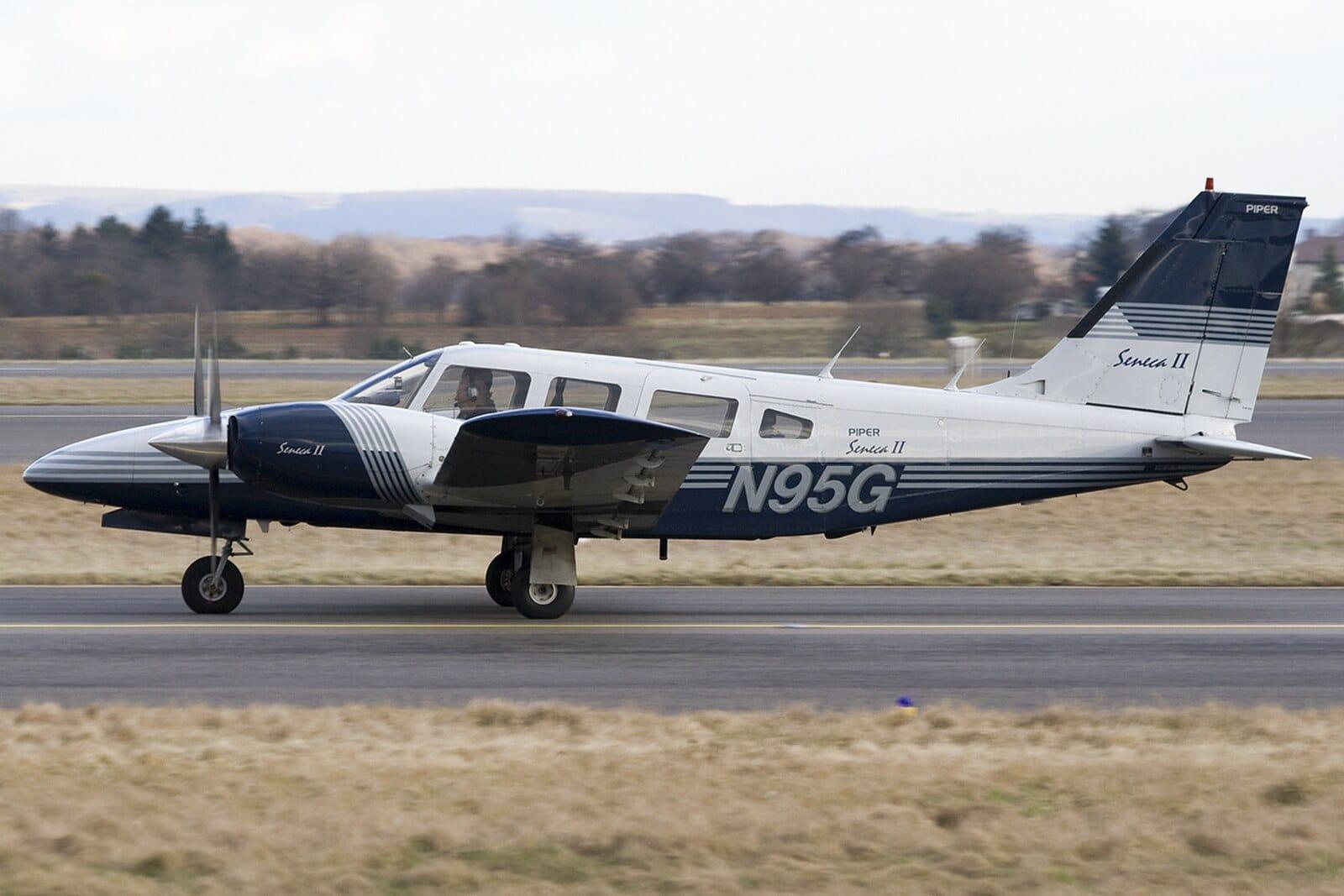
The Piper PA-34-200T Seneca II is a six to seven seat, low-wing, retractable-gear twin that replaced the original Seneca's Lycoming installation with turbocharged, counter-rotating Continental TSIO-360 engines of 200 hp each. The turbocharging restores power as the airplane climbs rather than merely protecting it, which is the basis of its high-altitude performance and its 25,000 ft ceiling.
Counter-rotating propellers mean there is no critical engine: losing the right engine is aerodynamically the same problem as losing the left. This record covers the PA-34-200T on the VB-850 manual basis. The earlier PA-34-200 and the later Seneca III through V have different engines, weights, and speed schedules and should not share these figures.
Video: Piper Seneca II PA-34 review, via YouTube.
Performance
Published cruise for the Seneca II runs near 188 kt at altitude on high cruise settings, with a maximum range figure around 870 nm. Sea-level climb with both engines is approximately 1,340 fpm. Those numbers depend on the turbochargers holding manifold pressure, so the altitude the book assumes matters more here than in a normally aspirated twin: the engines are rated 200 hp at sea level but can develop about 215 hp at 12,000 ft as the turbos work, a quirk of the fixed-bypass wastegate arrangement.
Fuel planning hinges on the tank option. Standard tanks hold 98 gal total with 93 gal usable, while the optional system raises that to 128 gal total and 123 gal usable, materially changing range and loading. The fuel burn calculator is a planning study aid; the AFM performance charts govern.
V-speeds
The Seneca II limitation schedule lists VNE 195 KIAS, VNO 163 KIAS, VA 122 KIAS, and VFE 107 KIAS. Gear speeds are 129 KIAS extended and for extension, and 107 KIAS for retraction.
The engine-out speeds define the type's training envelope: VMC 66 KIAS is the minimum control speed with one engine inoperative, and VSSE 76 KIAS is the floor for deliberate engine shutdowns in training. The VMC and VA glossary entries define the terms; the POH controls the procedures.
Weight and balance
The Seneca II's most instructive limit is not the 4,570 lb gross weight but the zero fuel weight rule: under the type certificate basis, all weight above 4,000 lb must be fuel. Against a standard empty weight near 2,839 lb, that caps occupants and baggage around 1,160 lb regardless of fuel state, and optional equipment lowers it further. The optional club-seating layout swaps one seat for a rear-facing middle row, which changes both the count and the loading stations.
Seven seats do not mean seven adults. A full cabin at maximum zero fuel weight leaves 570 lb for fuel, about 95 gal, which conveniently matches the standard usable supply but demonstrates why the seats-out configuration matters. Work the current empty weight and station arms for the assigned airplane; the weight and balance calculator is a study aid only.
Training notes
The Seneca II teaches turbocharger management, counter-rotating propeller behavior, and six-plus-seat loading alongside engine-out procedures, which is why advanced multi-engine and charter-track programs used it. Systems workload is higher than a Seminole or Duchess: cowl flaps, wastegates, and fuel management all have procedures attached. Transition training follows the assigned aircraft's AFM, including its engine-out minimums.
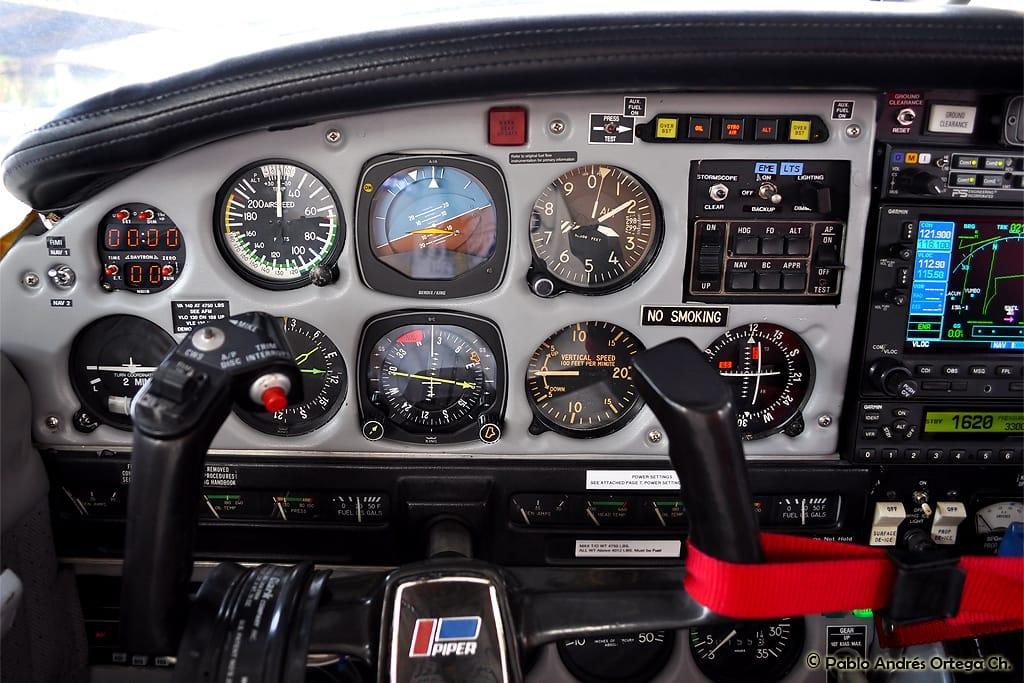
A Piper Seneca cockpit and instrument panel, representative of the PA-34 family layout. Photo: Pablo Andrés Ortega Chávez, GFDL 1.2, via Wikimedia Commons.
Variants
The PA-34-200 Seneca I shares the airframe concept but not the turbocharged Continental engines or the 4,570 lb gross. The PA-34-220T Seneca III, IV, and V carry 220 hp engines and revised documentation. Use each variant's own POH.
Sources
Structured values come from the Piper PA-34-200T Seneca II Pilot's Operating Handbook, report VB-850, with airspeed limits, engine, and weight context from FAA Type Certificate Data Sheet A7SO. Confirm the applicable revision, serial range, and aircraft records before using any figure.
Related aircraft
beechcraft
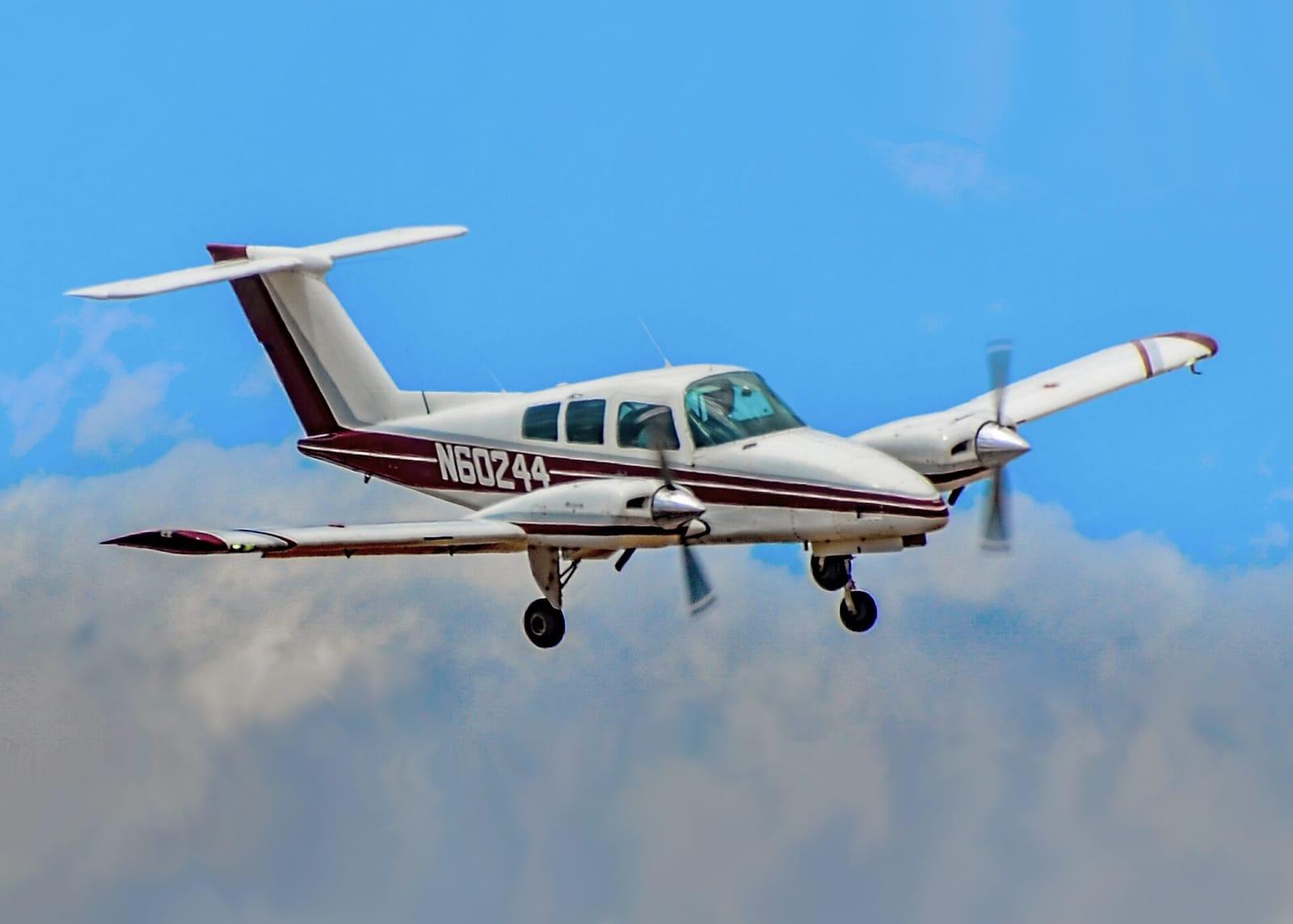
Beechcraft 76 Duchess
Beechcraft 76 Duchess specifications, V-speeds, useful load and performance data, with related multi-engine training notes and tools.
diamond
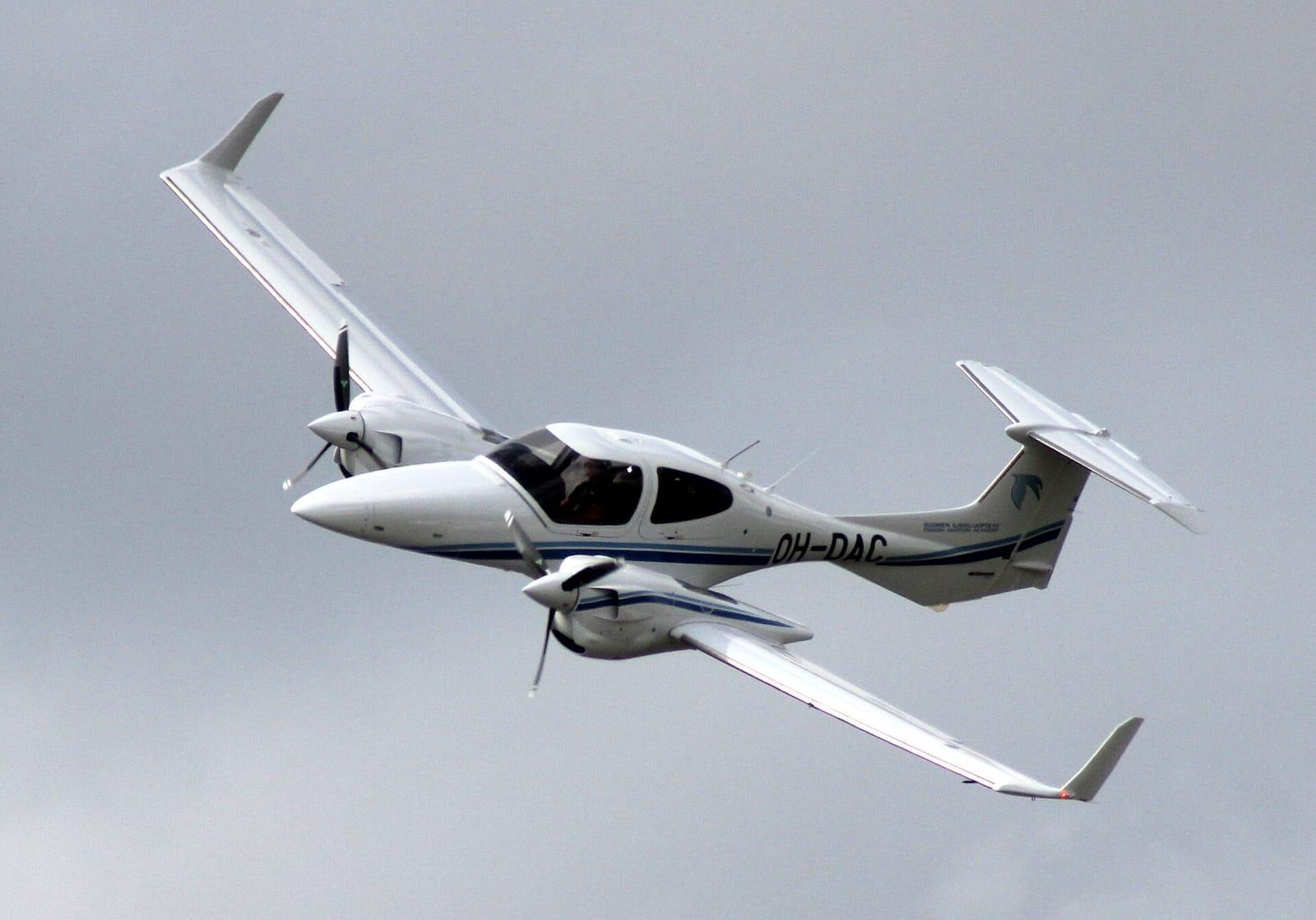
Diamond DA42 NG
Diamond DA42 NG specifications, V-speeds, useful load, performance context, and variant notes for the twin-engine diesel model basis.
diamond
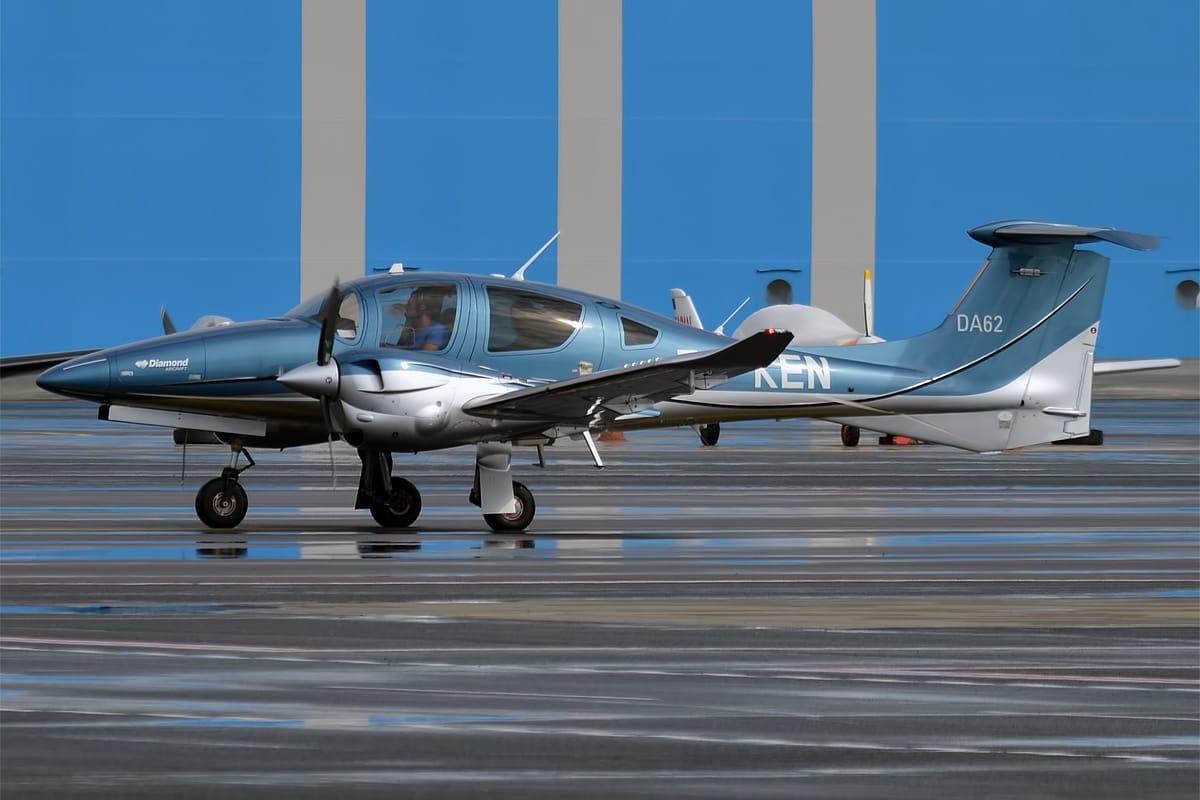
Diamond DA62
Diamond DA62 specifications, V-speeds, useful load and performance data, with related weight and balance and fuel tools.
Flight planning
Flight planning tools
Fuel burn calculator
Estimate trip fuel and entered reserve fuel from planned duration and burn rate.
Open toolWeight and balance calculator
Calculate loaded weight, moment, and center of gravity from station loading data.
Open toolFuel endurance calculator
Estimate time aloft from usable fuel, burn rate, and a planned reserve.
Open toolDirectory resources
Directory
FBO directory at selected US airports
Sourced FBO listings at selected airports, with questions to confirm directly with each operator.
Directory
A&P and IA aircraft mechanic directory
How to compare aircraft mechanic and repair-station listings, confirm credentials, and evaluate maintenance services.