
Reference disclaimer
For training and reference purposes only. Figures describe the stated variant under standard conditions. Verify against the applicable POH/AFM and current aircraft records.
Overview
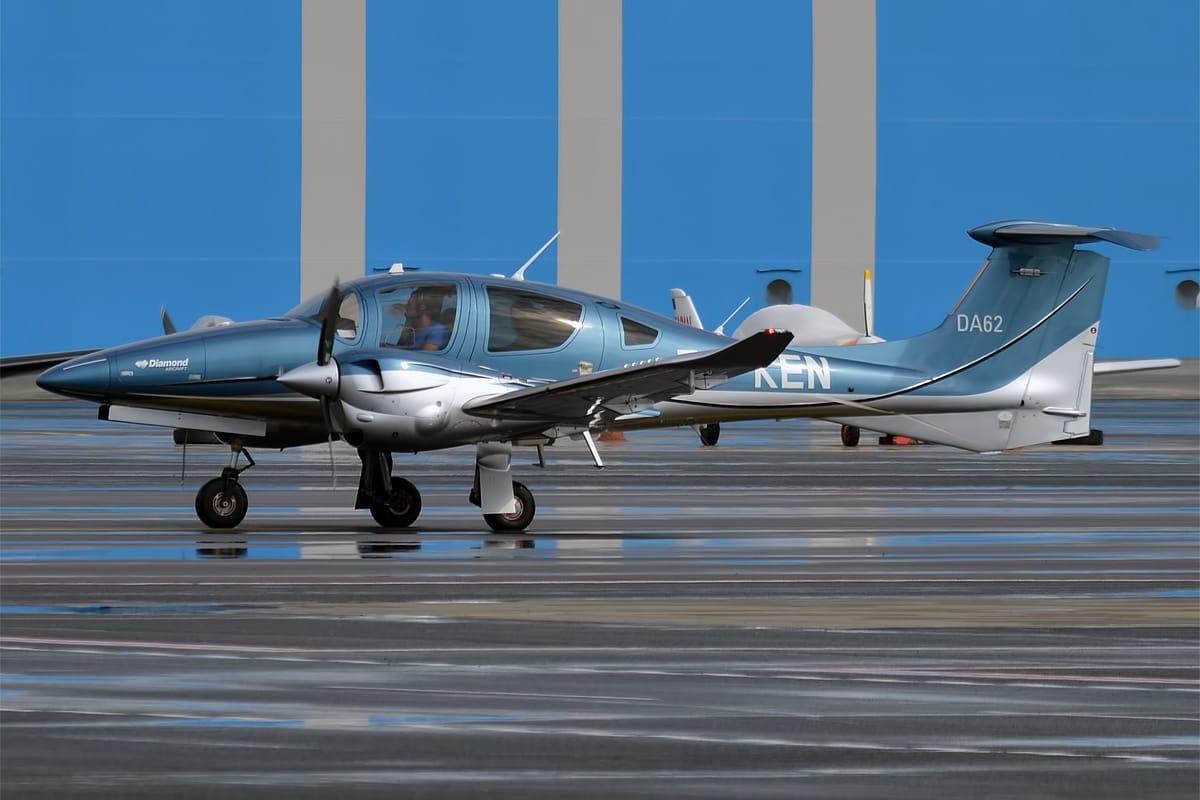
The Diamond DA62 is a composite, twin-engine airplane seating up to seven across three rows, built around two Austro Engine AE330 jet-fuel diesels of 180 hp each with FADEC single-lever control. It sits between high-performance singles and entry turboprops, and Diamond markets it for personal, charter, and special-mission work rather than primary multi-engine instruction.
The systems content is part of the type's character: Garmin G1000 NXi with the GFC700 three-axis autopilot and yaw damper, electronically controlled engines with autofeathering three-blade propellers, gull-wing cabin doors, and optional TKS known-ice protection. This record uses the 2,300 kg maximum takeoff mass basis, the figure applying to US-registered aircraft. A lighter 4,407 lb option exists for European operators, and the loading and performance figures change with it. The smaller Diamond DA42 NG is a related but structurally different airplane.
Video: AVweb Diamond DA62 flight trial, via YouTube.
Performance
Diamond publishes a maximum speed of 192 kt true at 14,000 ft, 180 kt at 85 percent power at 12,000 ft, and a maximum range of 1,288 nm. Combined fuel burn at a 60 percent setting is about 11.8 gph of jet fuel, a figure conventional avgas twins approach only at much lower speeds. Sea-level climb is around 1,030 fpm at maximum mass.
Usable fuel totals 86.4 gal split between a 50 gal main system and a 36.4 gal auxiliary, and the FADEC engines burn Jet A rather than avgas, which changes fuel availability planning at smaller airports. Single-lever power control and automatic propeller and feathering logic also change the cockpit workload: the engine-out drill centers on the AFM procedure rather than on manual prop control. The fuel burn calculator helps frame the trade; the AFM cruise tables govern.
V-speeds
The DA62 limitation schedule lists VNE 205 KIAS and VNO 162 KIAS. Maneuvering speed scales with mass from 120 KIAS at 3,968 lb up to 141 KIAS at maximum takeoff mass. Flap limits are 136 KIAS at the takeoff setting and 119 KIAS at landing.
Gear limits are unusual in one direction: the gear may be extended and flown extended at the full 205 KIAS, but retraction is limited to 162 KIAS, so the restrictive direction is gear up. For the engine-out case, VMC is 76 KIAS with flaps up and 70 KIAS at the takeoff flap setting, VSSE 86 KIAS is the minimum for intentional single-engine work, and the 89 KIAS blue line marks best single-engine rate of climb. The VMC and VA glossary entries define the terms.
Weight and balance
The published useful load of 1,545 lb against a 3,523 lb standard empty mass is generous for the class. Full usable fuel at jet fuel density takes roughly 576 lb, leaving around 970 lb for people and baggage, which supports five or six adults in a realistic loading.
The seven-seat option trades baggage volume for the third row rather than weight margin alone, so the seating choice and the baggage calculation belong together. The nose compartment is also partially consumed when weather radar is installed. Work the actual aircraft's empty mass and arm data; the weight and balance calculator is a study aid only.
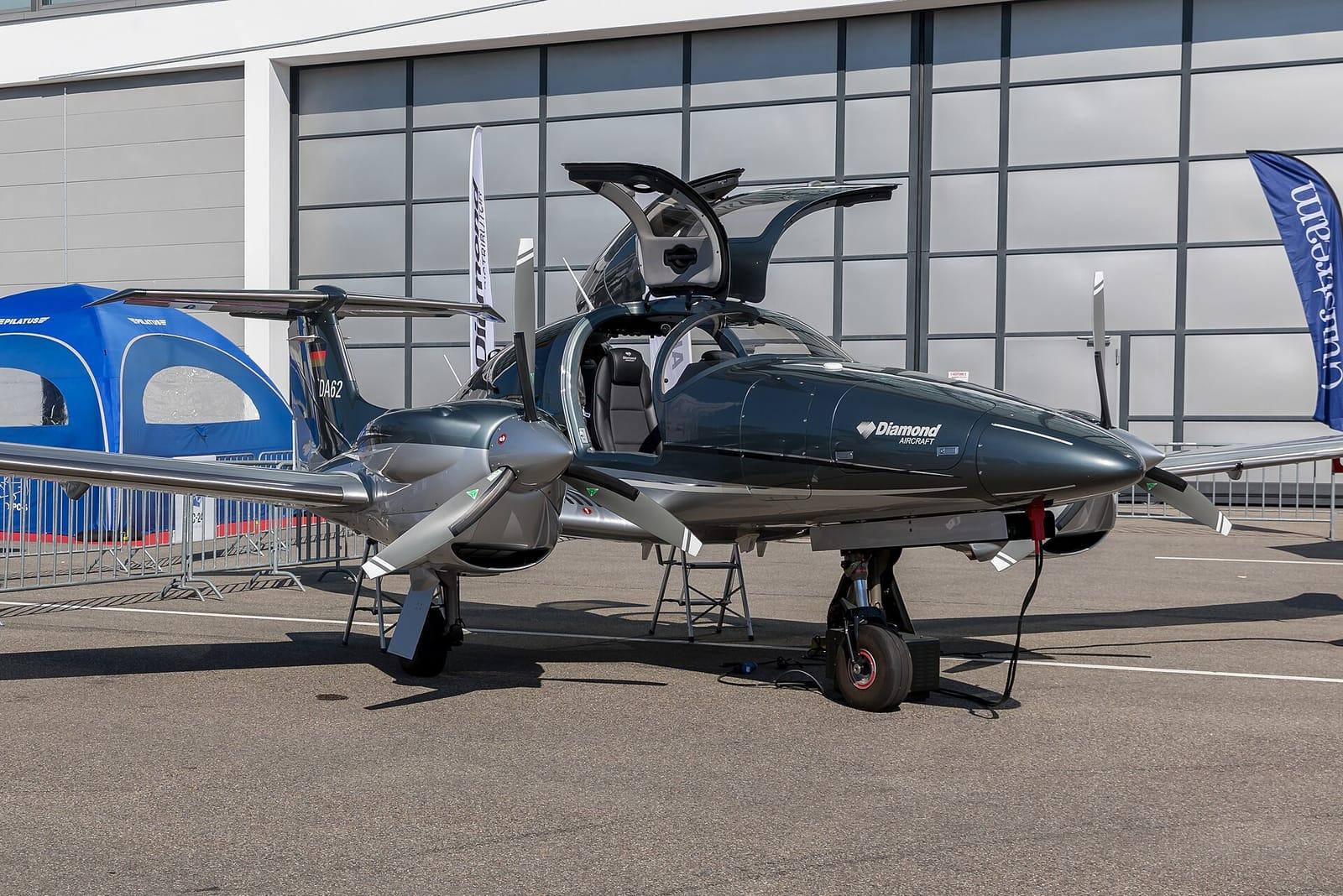
A Diamond DA62 on the ramp. Photo: Matti Blume, CC BY-SA 4.0, via Wikimedia Commons.
Variants
The DA62 has no letter-model variants; meaningful differences are the seating configuration (five or seven seats), the optional third row, known-icing TKS equipment, and the lower European mass basis. The DA42 family is a separate, smaller twin with its own manuals.
Sources
Structured values come from the Diamond DA62 Airplane Flight Manual on the 2,300 kg basis and Diamond Aircraft's published DA62 technical specifications. Confirm the applicable revision, mass configuration, and aircraft records before using any figure.
Related aircraft
beechcraft
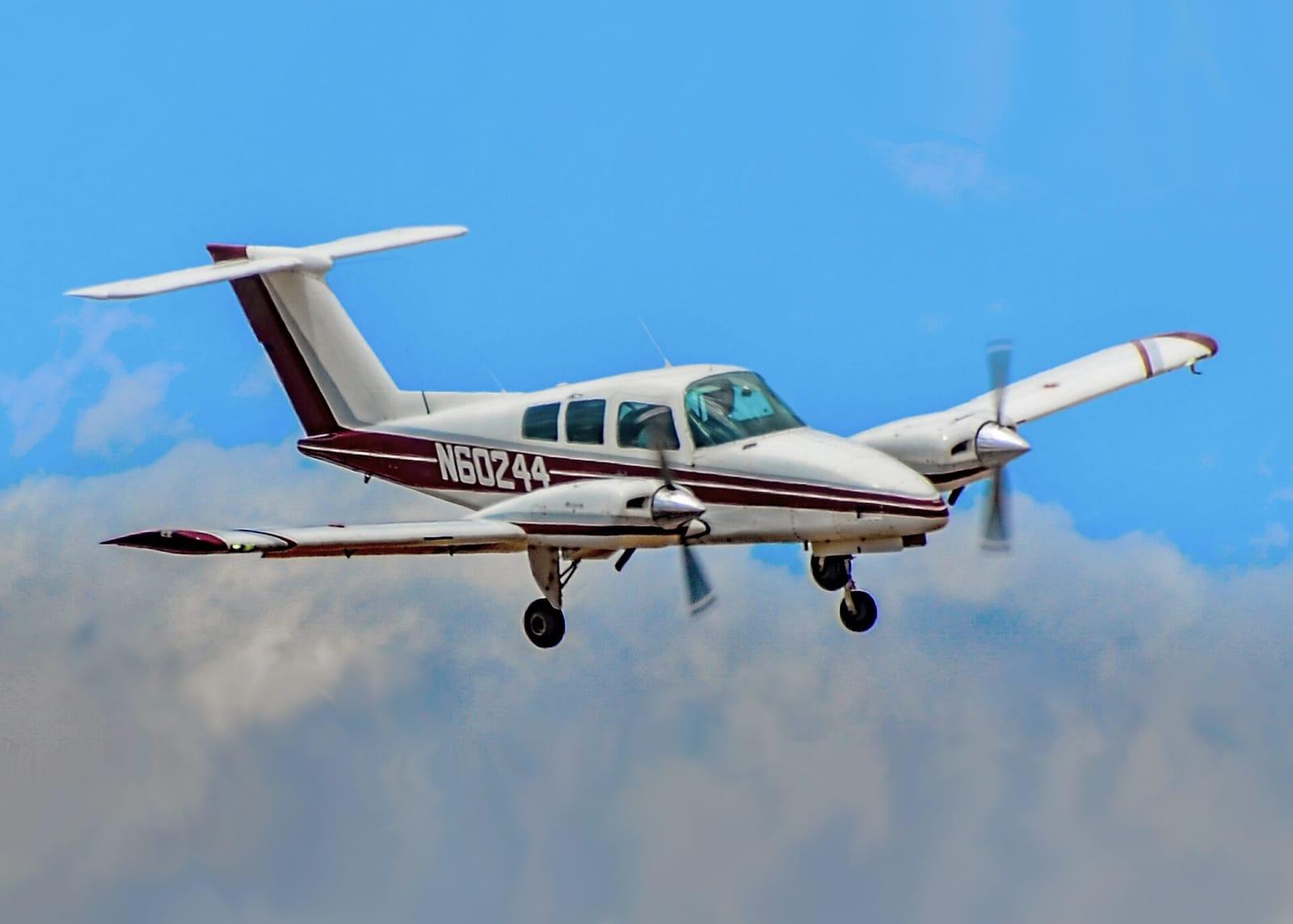
Beechcraft 76 Duchess
Beechcraft 76 Duchess specifications, V-speeds, useful load and performance data, with related multi-engine training notes and tools.
diamond
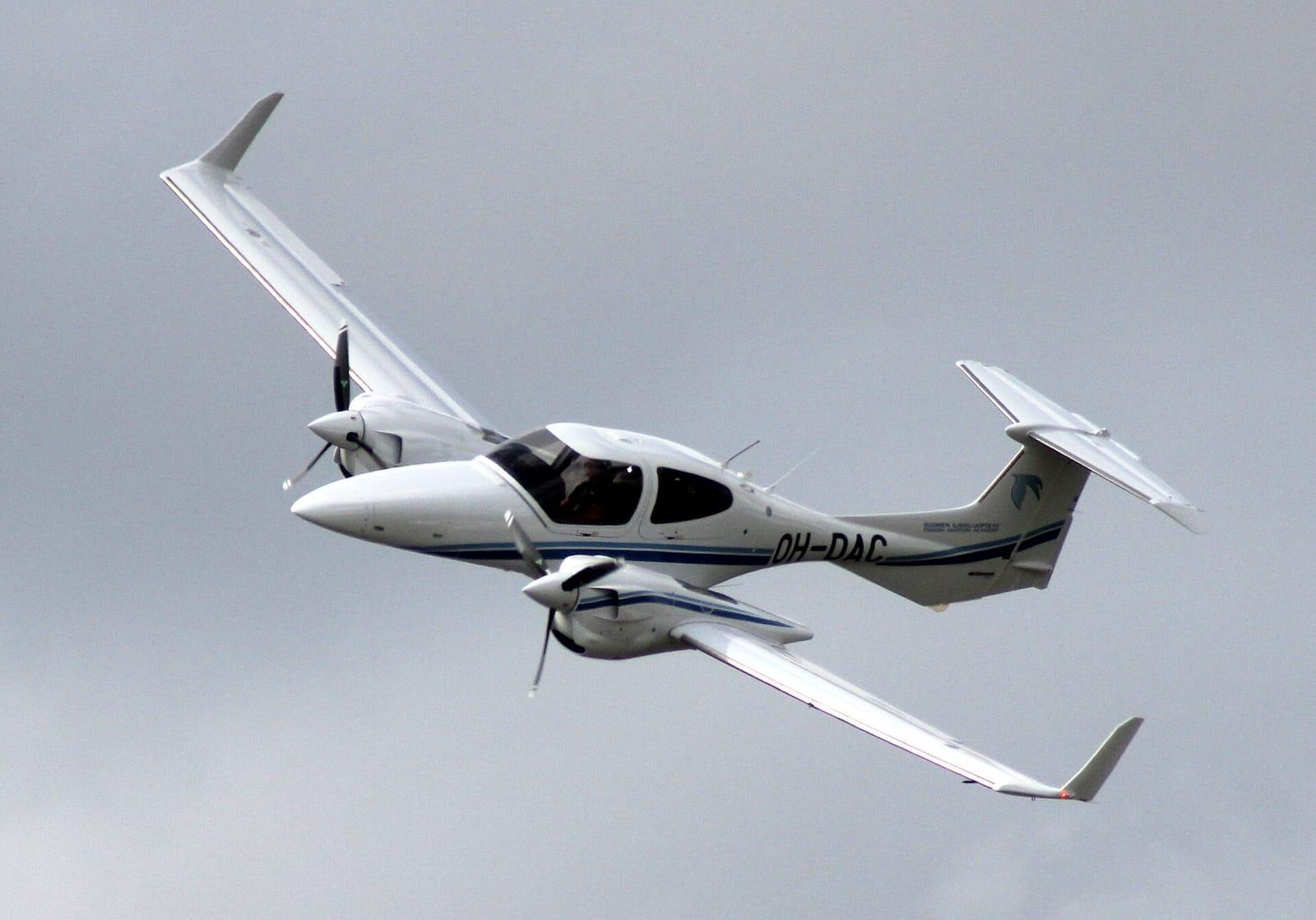
Diamond DA42 NG
Diamond DA42 NG specifications, V-speeds, useful load, performance context, and variant notes for the twin-engine diesel model basis.
piper
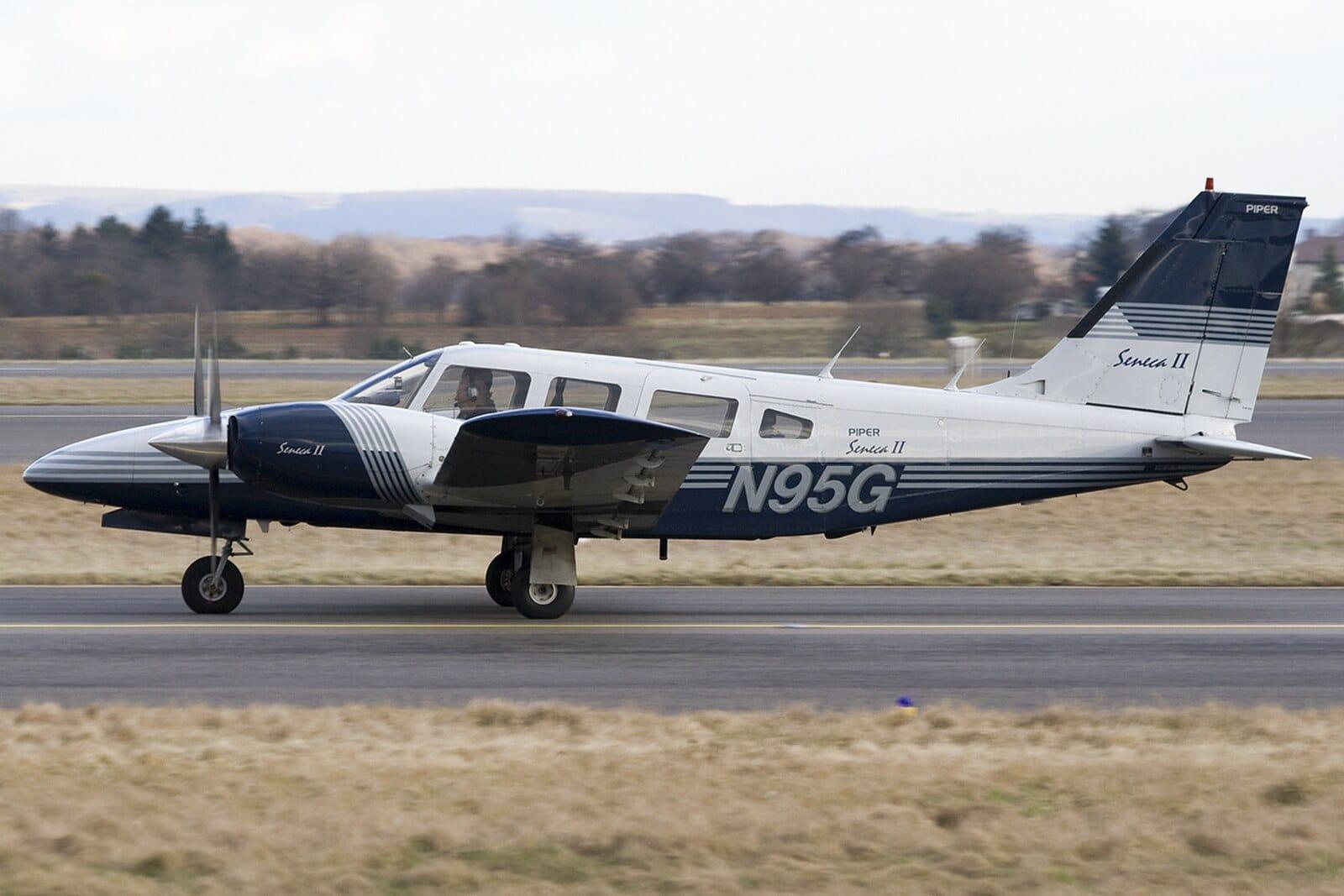
Piper PA-34-200T Seneca II
Piper PA-34-200T Seneca II specifications, V-speeds, useful load and performance data, with related multi-engine notes and tools.
Flight planning
Flight planning tools
Fuel burn calculator
Estimate trip fuel and entered reserve fuel from planned duration and burn rate.
Open toolWeight and balance calculator
Calculate loaded weight, moment, and center of gravity from station loading data.
Open toolFuel endurance calculator
Estimate time aloft from usable fuel, burn rate, and a planned reserve.
Open toolDirectory resources
Directory
FBO directory at selected US airports
Sourced FBO listings at selected airports, with questions to confirm directly with each operator.
Directory
A&P and IA aircraft mechanic directory
How to compare aircraft mechanic and repair-station listings, confirm credentials, and evaluate maintenance services.