
Reference disclaimer
For training and reference purposes only. Figures describe the stated variant under standard conditions. Verify against the applicable POH/AFM and current aircraft records.
Overview
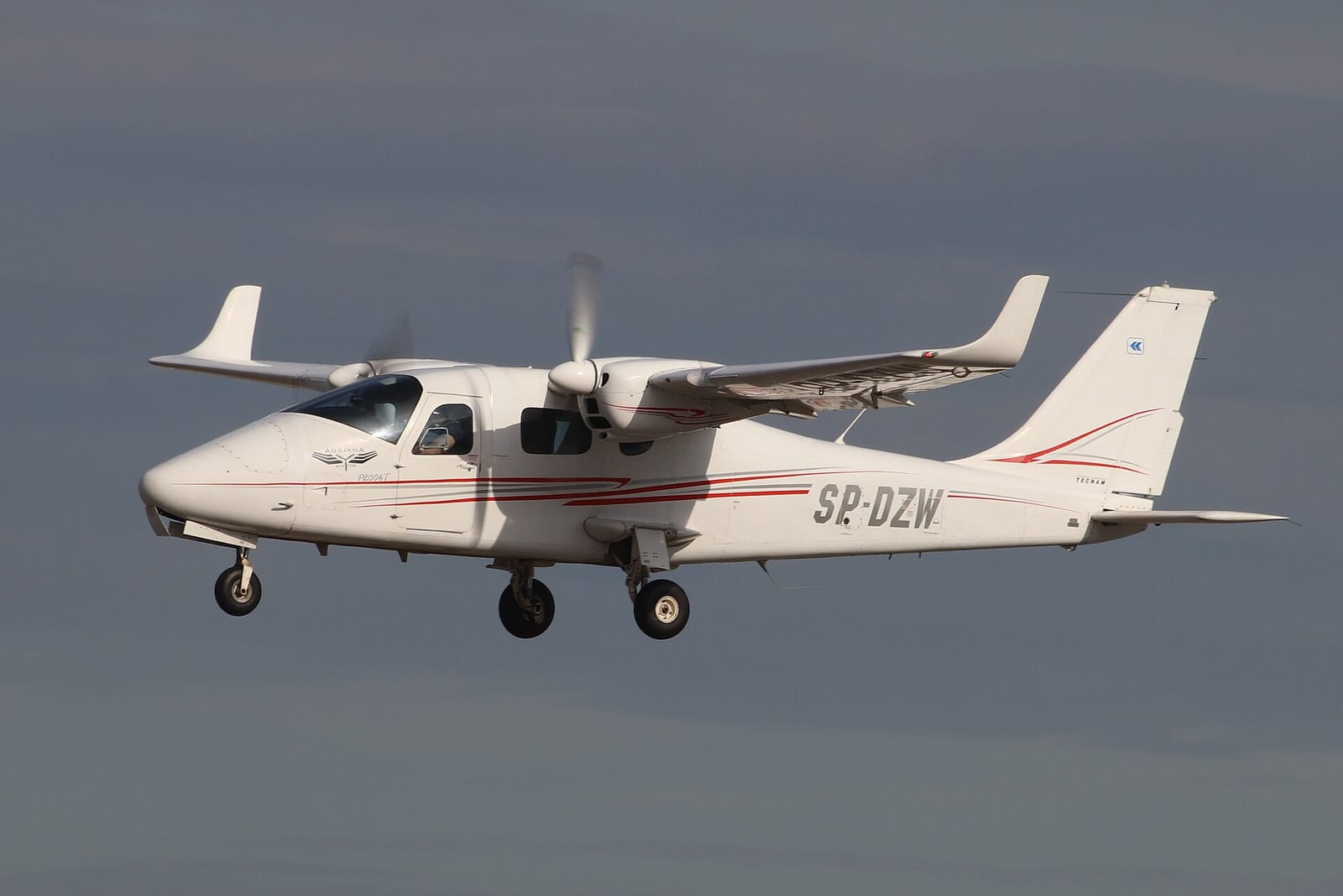
The Tecnam P2006T is a four-seat, high-wing, retractable-gear twin built around twin 100 hp Rotax 912 S3 engines. The fourth edition AFM configuration is defined here rather than treated as interchangeable with early 2,601 lb serials or the later NG and special-mission variants. Its modest fuel burn, Mogas and Avgas flexibility, and published speed schedule are specific to this model basis.
The design choice is deliberate economy. Two 100 hp engines deliver twin-engine redundancy and a genuine second engine for training at a fuel flow closer to a single, and the constant-speed feathering propellers give the type the full multi-engine systems story that schools need for the rating.
Video: Tecnam P2006T flight test, via YouTube.
Performance
The published cruise figure of about 145 kt maximum and the range figure of 669 nm are book values under the conditions and power setting used by the source. Altitude, leaning, temperature, wind, and airframe condition can move both figures materially, and the published single-engine performance is the honest measure of the type.
The climb figures make the safety case. VX 73 KIAS and VY 84 KIAS support a published 1,036 fpm two-engine climb, while VYSE 84 KIAS is the blue line that keeps an engine-out climb positive at sea level. That margin shrinks with density altitude, which is why the published figures matter more than intuition. Use the density altitude calculator as a study aid, then compare the result with the current AFM chart.
V-speeds
The P2006T speed schedule includes VNE 171 KIAS, VNO 138 KIAS, and VA 122 KIAS at maximum weight. The multi-engine speeds carry operational weight: VMC 62 KIAS is the red radial line, VSSE 70 KIAS is the minimum speed for simulated engine-out training, and VYSE 84 KIAS is the blue line. Flap limits are 122 KIAS at takeoff and 93 KIAS full, and gear operation is limited to 122 KIAS for the stated source basis.
These values are references to the named document, not substitutes for the placards and current AFM in the airplane. The glossary pages for VMC, VX, and VY explain the terms without changing the model-specific limits here.
Weight and balance
The published useful load of about 816 lb applies to the stated standard empty-weight basis on the current 2,712 lb gross weight, not to every serial. Earlier airframes carry a 2,601 lb basis, and avionics or mission equipment move the current empty weight and center of gravity.
The stated 52.8 gal fuel capacity is roughly 300 lb when full, leaving useful room for occupants and the 176 lb baggage allowance. Run the actual aircraft's empty weight, arm, fuel quantity, occupants, and baggage through a current weight and balance record. The weight and balance calculator is a reference aid, not an operational release.
Training notes
The P2006T suits multi-engine syllabi where schools want modern systems, low operating cost, and honest engine-out performance. Students work on the Rotax engine controls, feathering propeller logic, and the discipline of holding the blue line on one engine, all on an airframe whose margins are real but modest. Schools should teach the serial-specific AFM procedures rather than importing conventional-twin habits from heavier aircraft.
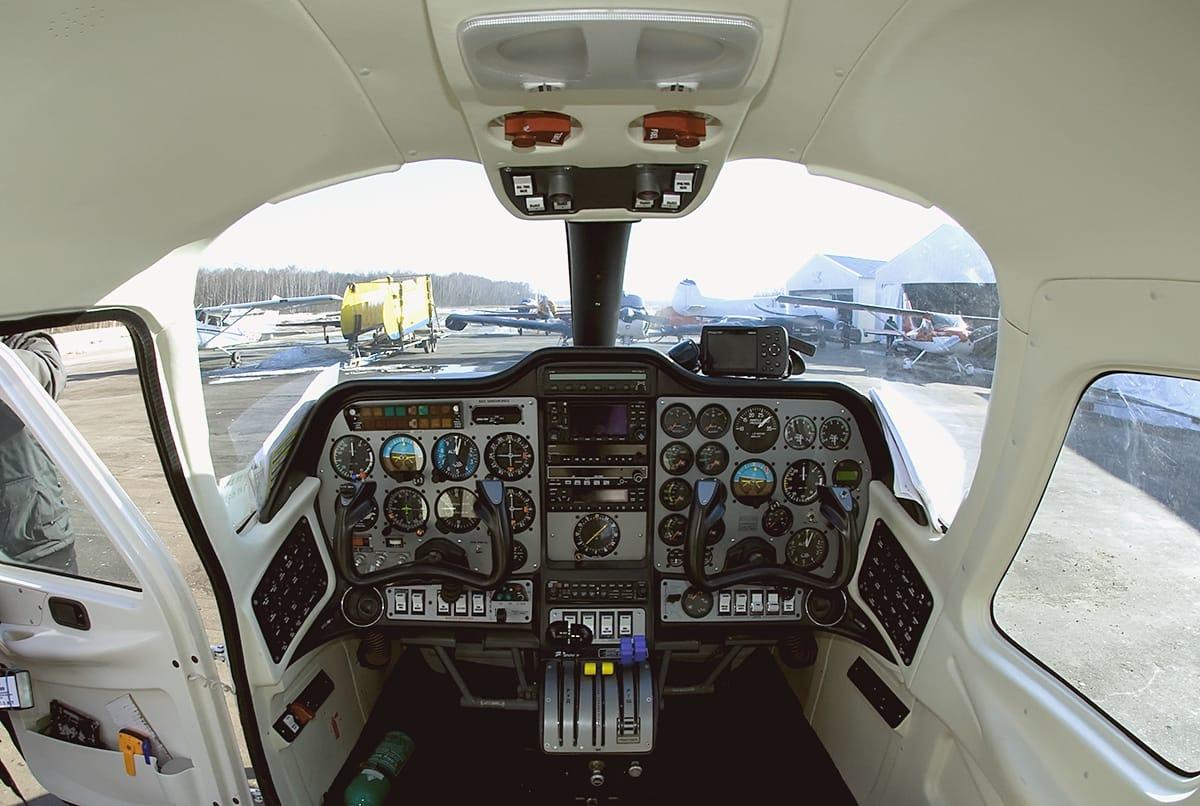
The Tecnam P2006T cockpit and instrument panel. Photo: Aleksandr Markin, CC BY-SA 2.0, via Wikimedia Commons.
Variants
The P2006T designation covers serials with different weight and equipment bases. Early airframes carry a 2,601 lb maximum weight, the NG revision updates avionics and figures, and the SMP and MR subvariants add mission equipment with their own documentation. Figures from any of those bases are not substitutes for the stated values. A separate model file is appropriate when the AFM basis and model-specific facts differ enough to answer a different search intent.
Sources
The structured values on this page are tied to the Tecnam P2006T Aircraft Flight Manual on the fourth edition basis, with model context from EASA and FAA type certification data. Confirm the applicable revision, serial range, and aircraft records before using any figure.
Related aircraft
Flight planning
Flight planning tools
Fuel burn calculator
Estimate trip fuel and entered reserve fuel from planned duration and burn rate.
Open toolWeight and balance calculator
Calculate loaded weight, moment, and center of gravity from station loading data.
Open toolFuel endurance calculator
Estimate time aloft from usable fuel, burn rate, and a planned reserve.
Open toolDirectory resources
Directory
FBO directory at selected US airports
Sourced FBO listings at selected airports, with questions to confirm directly with each operator.
Directory
A&P and IA aircraft mechanic directory
How to compare aircraft mechanic and repair-station listings, confirm credentials, and evaluate maintenance services.