
Reference disclaimer
For training and reference purposes only. Figures describe the stated variant under standard conditions. Verify against the applicable POH/AFM and current aircraft records.
Overview
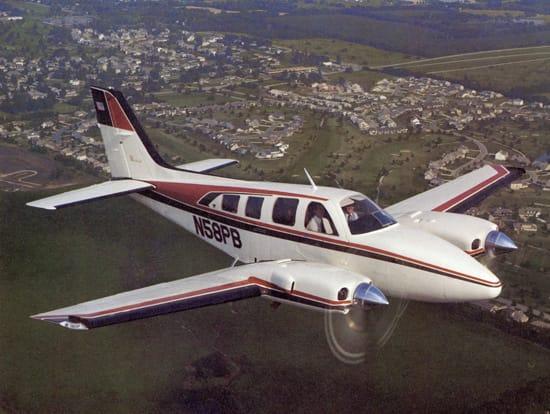
The Beechcraft Baron 58 is a six-seat, low-wing, retractable-gear piston twin that stayed in production for decades as a personal transport and multi-engine trainer. The 58 configuration with Continental IO-520-C engines is defined here rather than treated as interchangeable with the pressurized 58P, the turbocharged 58TC, or the later G58. Its twin 285 hp installations, 5,400 lb maximum weight, and published speed schedule are specific to this model basis.
The airframe carries the handling reputation of the Bonanza family into a twin. The long fuselage gives a usable club-seating cabin and a separate aft baggage compartment, which is why the type remains common in charter and owner-flown business use alongside its training role.
Video: Beechcraft 58 Baron takeoff, via YouTube.
Performance
The published cruise figure of about 200 kt and the normal range figure of 1,013 nm are book values under the conditions and power setting used by the source. Standard tanks carry 142 gal with 136 usable, and optional fuel systems change both range and payload.
The twin-engine climb figures sit alongside the single-engine numbers that define the type's emergency envelope. VX 92 KIAS and VY 105 KIAS are the two-engine schedule, while VYSE 101 KIAS is the blue line for one engine inoperative. Single-engine rate of climb at gross is roughly 400 fpm under standard conditions and degrades with density altitude, which is why the published figures matter more than intuition. Use the density altitude calculator as a study aid, then compare the result with the current POH chart.
V-speeds
The Baron 58 speed schedule includes VNE 223 KIAS, VNO 195 KIAS, and VA 156 KIAS, which also serves as the turbulent air penetration reference. The multi-engine speeds carry operational weight: VMC 84 KIAS is the red radial line, VSSE 88 KIAS is the minimum speed for intentional engine shutdown in training, and VYSE 101 KIAS is the blue line. Flap and gear limits are VFE 122 KIAS and VLE 152 KIAS for the stated source basis.
These values are references to the named document, not substitutes for the placards and current POH in the airplane. The glossary pages for VMC, VX, and VY explain the terms without changing the model-specific limits here.
Weight and balance
The published useful load of about 2,039 lb applies to the stated empty-weight basis, not to every Baron 58. Radar, deice equipment, avionics, and interior options move the current empty weight and center of gravity, and many airframes are heavily equipped.
Full fuel at the stated 142 gal capacity consumes roughly half the useful load, and the split between nose, cabin, and aft baggage compartments gives real loading flexibility if the schedule is run honestly. Run the actual aircraft's empty weight, arm, fuel quantity, occupants, and baggage through a current weight and balance record. The weight and balance calculator is a reference aid, not an operational release.
Training notes
The Baron 58 suits multi-engine syllabi where students need a conventional twin with enough performance to make engine-out work meaningful. The margin between VMC 84 KIAS and the approach speeds is the lesson: the airplane demands disciplined airspeed control on one engine, and the type's long production run means serial-specific systems differ between training airframes. Schools should teach the handbook procedures and the critical-engine concept rather than relying on generic light-twin habits.
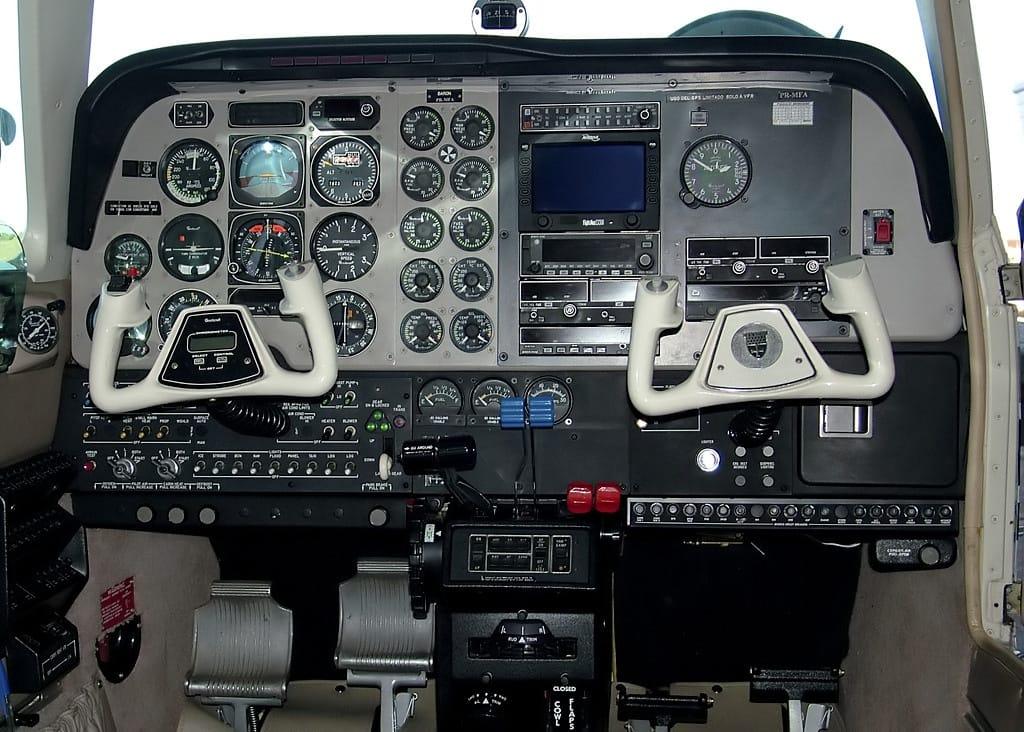
A Beechcraft Baron 58 on the ramp. Photo: Renato Spilimbergo Carvalho, GFDL 1.2, via Wikimedia Commons.
Variants
The Baron name covers airframes with different fuselages, engines, and ceilings. The Baron 55 is the short-body sibling, the 58P adds pressurization, and the 58TC adds turbochargers. The G58 that ended the line uses IO-550-C engines at 300 hp each, a 5,524 lb gross weight, and its own handbook figures, so its numbers are not substitutes for the IO-520-C 58 values. A separate model file is appropriate when the POH basis and model-specific facts differ enough to answer a different search intent.
Sources
The structured values on this page are tied to the Beechcraft Baron 58 Pilot Operating Handbook on the IO-520-C basis, with model context from FAA Type Certificate Data Sheet 3A16. Confirm the applicable revision, serial range, and aircraft records before using any figure.
Related aircraft
Flight planning
Flight planning tools
Fuel burn calculator
Estimate trip fuel and entered reserve fuel from planned duration and burn rate.
Open toolWeight and balance calculator
Calculate loaded weight, moment, and center of gravity from station loading data.
Open toolFuel endurance calculator
Estimate time aloft from usable fuel, burn rate, and a planned reserve.
Open toolDirectory resources
Directory
FBO directory at selected US airports
Sourced FBO listings at selected airports, with questions to confirm directly with each operator.
Directory
A&P and IA aircraft mechanic directory
How to compare aircraft mechanic and repair-station listings, confirm credentials, and evaluate maintenance services.