
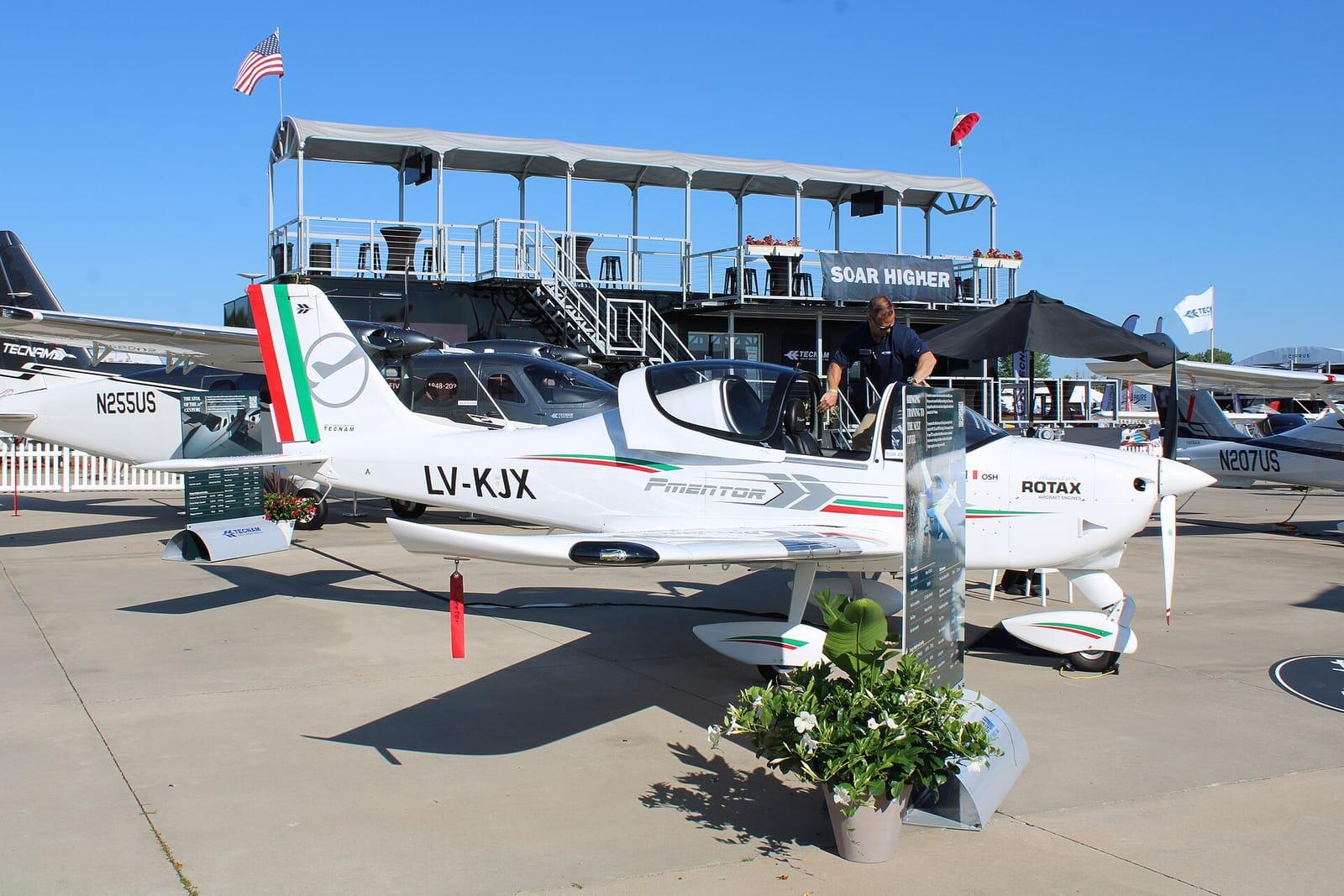
Reference disclaimer
For training and reference purposes only. Figures describe the stated variant under standard conditions. Verify against the applicable POH/AFM and current aircraft records.
Overview
The Tecnam P-Mentor is a two-seat, low-wing trainer built around a 100 hp Rotax 912iSc3 Sport and designed from the start for instrument training rather than adapted to it. It pairs a Garmin G3X Touch IFR suite with a variable-pitch propeller and a control setup that lets schools simulate retractable-gear procedures for complex-aircraft training.
The type is new enough that certification history is part of the story: EASA approved it under CS-23 in 2023, and the FAA issued type certificate A00067IB on May 7, 2024. As of late 2026 it is in service with US flight schools, including the delivery batches announced for HCH Aviation with Stephen F. Austin State University, Kilo Charlie Aviation, and EpicSky Flight Academy.
Video: Tecnam P-Mentor at AirVenture, via YouTube.
Performance
Tecnam publishes a maximum cruise of 117 kt true, a range of 950 nm, and a takeoff run of about 1,017 ft at maximum weight. Fuel consumption around 3.7 gph on 37 gal capacity, 34 gal usable, underpins an endurance figure approaching nine and a half hours, which is the operational point: a school can fly a full day of lessons on one fueling.
The fuel approval is broader than a comparable Lycoming trainer: the type certificate lists both 100LL avgas and automotive mogas to ASTM D4814 with a minimum RON of 95. Tecnam quotes a direct operating cost around $65 per hour on that basis, a manufacturer figure rather than an audited one. Book climb is around 750 fpm at sea level, and the 13,000 ft maximum operating altitude bounds the training envelope. Flight-test reporting on the type notes that climb margins thin on hot days at maximum weight, which is exactly what the density altitude calculator is for.
V-speeds
The FAA type certificate basis lists VNE 135 KIAS, VNO 107 KIAS, and VA/VO 102 KIAS. Flap limits differ by setting: 106 KIAS at takeoff flap and 96 KIAS at landing flap. The published stall figure with flaps down is 44 KCAS.
The narrow band between VNO and VNE, about 28 kt, reflects the airplane's training role rather than touring speed, and the flap speed structure rewards the kind of configuration discipline the type is meant to teach. The VA, VNE, and VFE glossary entries define the terms.
Weight and balance
A 628 lb useful load on a 1,587 lb gross weight is workable for the student-plus-instructor mission: full usable fuel of 34 gal weighs about 204 lb, leaving roughly 424 lb for the two occupants and the 66 lb baggage allowance. Two heavy adults with baggage will trade fuel for payload on cross-country legs.
The type certificate sets a forward center of gravity limit of 70.1 in aft of datum at maximum weight and an aft limit of 74.4 in, so solo versus dual loading shifts the envelope usefully. The weight and balance calculator is a study aid; the aircraft's current AFM and equipment list govern.
Training notes
The P-Mentor's value proposition is a single airframe from ab initio through instrument rating: G3X Touch displays, PBN and RNAV procedures, an autopilot option, a constant-speed propeller, and simulated retractable-gear operation for complex training. The optional ballistic parachute is an equipment choice some schools take and others skip, and it changes installed weight either way. Procedures come from the assigned aircraft's flight manual and the school's syllabus.
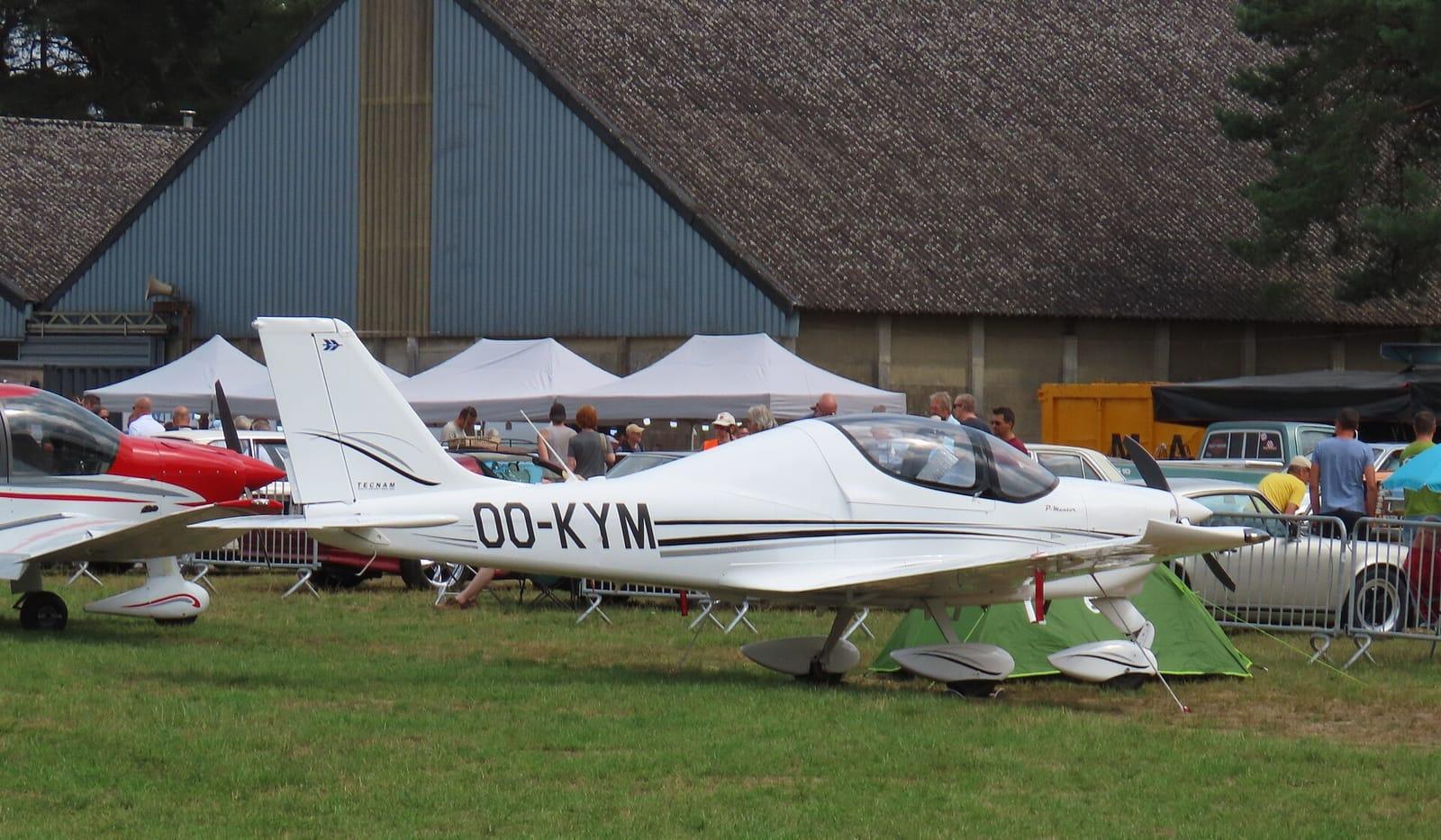
A Tecnam P-Mentor on the ramp. Photo: Ad Meskens, CC BY-SA 4.0, via Wikimedia Commons.
Variants
The meaningful differences are equipment fits rather than model designations: the VFR and IFR configurations, the autopilot option, and the parachute installation each change weight and the applicable supplements.
Sources
Structured values come from FAA Type Certificate Data Sheet A00067IB and Tecnam's published P-Mentor technical specifications and flight manual data. Confirm the applicable revision, equipment fit, and aircraft records before using any figure.
Related aircraft

american-champion
American Champion 8KCAB Super Decathlon
American Champion 8KCAB Super Decathlon specifications, V-speeds, useful load, performance context, and variant notes for the current production basis.

beechcraft
Beechcraft Bonanza A36
Beechcraft Bonanza A36 specifications, V-speeds, useful load, performance context, and variant notes for the IO-550-B model basis.

cessna
Cessna 150M
Cessna 150M specifications, V-speeds, useful load, performance context, and variant notes for the 1977 Commuter basis.
Flight planning
Flight planning tools
Fuel burn calculator
Estimate trip fuel and entered reserve fuel from planned duration and burn rate.
Open toolWeight and balance calculator
Calculate loaded weight, moment, and center of gravity from station loading data.
Open toolFuel endurance calculator
Estimate time aloft from usable fuel, burn rate, and a planned reserve.
Open toolDirectory resources
Directory
FBO directory at selected US airports
Sourced FBO listings at selected airports, with questions to confirm directly with each operator.
Directory
A&P and IA aircraft mechanic directory
How to compare aircraft mechanic and repair-station listings, confirm credentials, and evaluate maintenance services.